 The Indian Express ·
Crime, law and justice
No hospital stay? Karnataka High Court backs Rs 2.8 lakh cancer treatment insurance claim
Giving injections without hospitalisation every three months after the chemotherapy cycle did not disconnect them from the underlying disease or its treatment, the court stated.
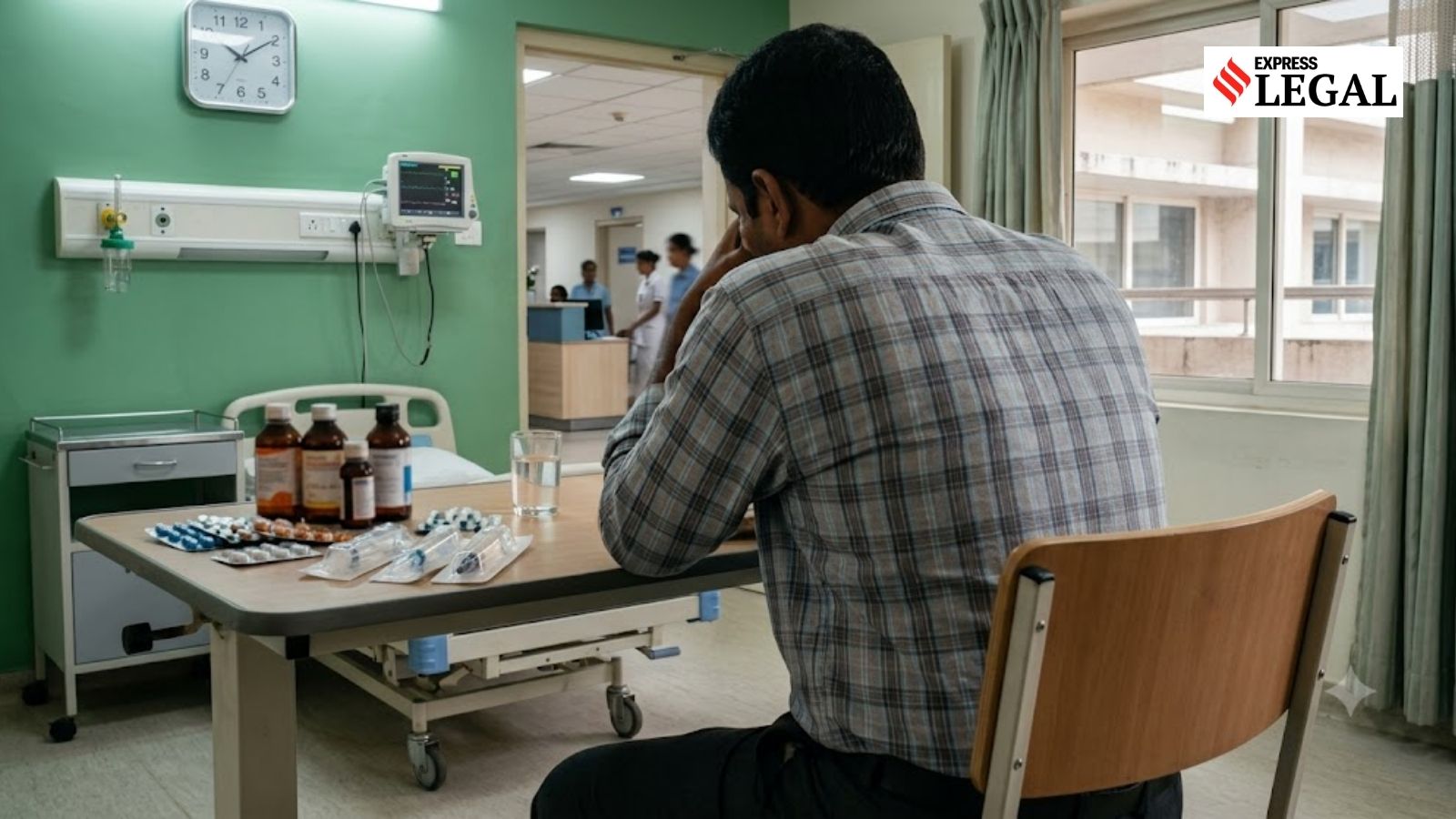
Observing that “hospitalisation is not an end in itself” but only a mode of administering medical treatment, the Karnataka High Court recently held that an insurance company cannot deny coverage to a person just because his cancer treatment was administered without hospitalisation.
Justice Suraj Govindaraj observed in the September 1 order that giving injections at intervals of three months and after the chemotherapy cycles did not disconnect them from the underlying disease or make them unrelated to the insured condition. The court said the patient cannot be expected to get an unnecessary hospital admission just to bring the treatment within the insurer’s preferred interpretation of the policy, and upheld the reimbursement of Rs 2.85 lakh.
“Hospitalisation is not an end in itself; it is a mode in which medical treatment may be administered. Where advances in medical science enable a treatment which would otherwise have required a longer hospital stay to be administered safely and effectively without hospitalisation, the absence of hospitalisation cannot, by itself, be treated as determinative of whether the treatment is connected with the insured disease,” the order stated.
It said the nature of the injections was such that hospitalisation was not considered medically necessary. “The court is conscious that the mere fact that an insured person is suffering from a serious ailment cannot, by itself, enlarge the contractual liability of an insurer. Compassion cannot substitute the terms of a contract,” it added.
“However, where the claim falls within a reasonable construction of the policy and the treatment is admittedly connected with the insured disease, the insurer cannot adopt an unduly restrictive interpretation merely because the treatment was capable of being administered without hospitalisation,” the court stated.
Justice Suraj Govindaraj held that the injections could not be characterised as medicines administered for an ailment unconnected with the disease.
A retired employee of Vijaya Bank was covered under a health insurance scheme for retired employees after the bank merged with the Bank of Baroda. He was covered under the scheme with an annual coverage of Rs 9 lakh from November 1, 2021 to October 31, 2022.
The retiree had stage-4 prostate cancer and had undergone treatment at HCG Hospital, Bengaluru, including chemotherapy. During the course of the treatment, he was advised to continue two post-chemotherapy injections, namely, Zoladex and Xgeva, once every three months.
He was admitted to Indra Hospital, Mangaluru several times between November 2021 and August 2022, and the insurer reimbursed some of his medical expenses. The insurer, however, did not provide reimbursement for the Zoladex and Xgeva injections. Claiming the unpaid amount of Rs 2.85 lakh, the man instituted proceedings before the Permanent Lok Adalat.
The Lok Adalat directed the insurer to pay Rs 2.85 lakh with 6 per cent annual interest, in addition to Rs 25,000 as compensation. The insurance company challenged the order before the Karnataka High Court.
Advocate Devaiah I S, counsel for the insurance company, said the insurer was not willing to make an offer for a settlement as it had no liability to reimburse the expenditure for the two injections.
He argued that the Permanent Lok Adalat failed to properly consider the specific terms and conditions of the insurance policy and the reasons for rejecting the claim. The counsel stated that the administration of the injections did not constitute a medical treatment or a surgical procedure which would have required hospitalisation for over 24 hours.
It was argued that the said expenditure cannot be brought within the expression “Day Care Treatment” under insurance policy clauses.
Advocate Ranjan Shetty, appearing for the retiree, submitted that he was undergoing treatment and that the injections were part of the continuing treatment following his chemotherapy cycles. The counsel said the injections were administered once every three months it does not take them outside the scope of treatment for the underlying disease.
He added that the injections were prescribed by the treating doctors as part of the continuing management of the man’s stage-4 prostate carcinoma and were, therefore, directly connected with the insured medical condition.
The high court noted that if a particular treatment necessarily required hospitalisation, the expenditure would be reimbursable, but if medical advancement meant that its objective could be achieved through a short outpatient procedure without occupying a hospital bed, the insured would lose coverage.
The judge said that such an interpretation would make the availability of insurance dependent upon the manner of administration of the treatment rather than its therapeutic purpose and its connection with the insured disease.
The court held that the injections could not be characterised as medicines administered for an ailment unconnected with the disease for which treatment was being given, and they were part of the prescribed treatment for his advanced prostate cancer. “The fact that a treatment can now be safely administered without hospitalisation cannot, by itself, convert the treatment into something other than medical treatment for the underlying disease,” it stated.
The court directed the insurer to make the payment directed by the Permanent Lok Adalat, and dismissed the petition.