 The Indian Express ·
Crime, law and justice
Bombay High Court reinstates TISS professor fired for ‘misconduct’, grants 50% back wages
The professor was accused of creating a WhatsApp group to run a placement service, using the TISS' logo, and soliciting students for personal gain but the court held merely creating or joining a group, without proof of personal financial benefit, does not justify such a penalty.
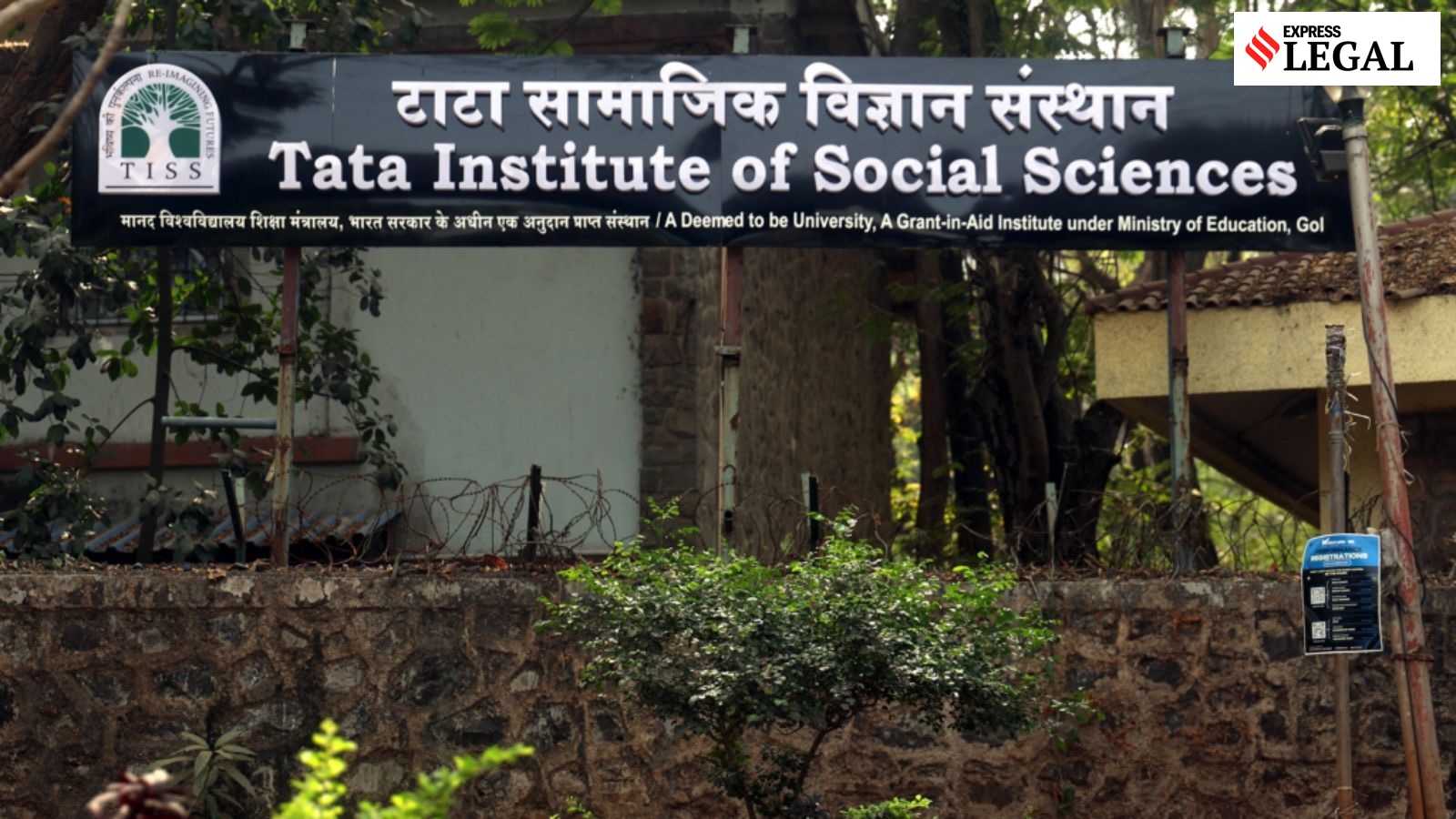
The Bombay High Court has reinstated a Tata Institute of Social Sciences (TISS) professor with 50 per cent back wages, setting aside his compulsory retirement over misconduct allegations. The professor was accused of creating a WhatsApp group to run a placement service, using the institute’s logo, and soliciting students and alumni for personal gain. However, the court held that WhatsApp is simply a social media platform and merely creating or joining a group, without proof of personal financial benefit, does not justify such a penalty, making the punishment grossly disproportionate.
Dr Swapan Garain, 57, moved the High Court seeking reinstatement after being suspended by the Director and Disciplinary Authority, Tata Institute of Social Sciences, on March 29, 2016, and then compulsorily retired on September 6, 2017.
While dealing with his plea, a bench of Justices M S Karnik and Sandesh D Patil noted that Garain had initially used the institute’s logo but later removed it.
The bench added, “WhatsApp being a social media platform, merely starting a WhatsApp group and being a member of the WhatsApp group without there being further finding of any personal gain diverted to the benefit of the Petitioner, in our view, the punishment of ‘voluntary retirement’ is grossly disproportionate.”
TISS accused Garain, an alumnus, of creating a parallel WhatsApp group styled as “TISSians Career Impact2” without its permission and violating its rules by using the official logo.
The institute called it a clear violation of a clause of the Code of Conduct applicable to TISS employees. Further, it was alleged that Garain created the group for placement services and breached the service conditions.
Justices M S Karnik and Sandesh D Patil noted that Garain had initially used the institute’s logo but later removed it. (Image enhanced using AI)
“The WhatsApp group created by the petitioner was nothing but,” TISS alleged, “virtually a placement service, soliciting students and alumni for his personal gains”. The same was said to amount to “engaging in business of placement services, which he, being a full-time, permanent faculty member of the institute, was prohibited from doing under the Service Rules”.
Using TISS’ was stated to be an infringement of the intellectual property rights.
As a result, Garain was accused of exploiting TISS’ “resources, knowledge and information” in breach of the accepted service conditions, apart from being a criminal offence under the Information Technology Act 2000.
Advocate Jaiprakash Sawant termed his client’s compulsory retirement as “totally perverse” as essentially the charge was that he sent a few WhatsApp posts in relation to the career opportunities in a WhatsApp group formed by former TISS students which had amounted to trade and business gain.
Sawant argued that an in-house inquiry was not only unfair but its findings were perverse too. Garain was stated to be a guide for PhD students, and his career had been ruined through the action against him.
Appearing for the institute and other related parties, advocate Dhruva Gandhi submitted that the punishment imposed upon Garain was not shocking and, in fact, in consonance with the allegations proved against him. The WhatsApp conversation, Gandhi claimed, had clearly shown group members being appealed to raise funds. The job opportunities were provided and members or job aspirants were invited, and the professor couldn’t prove that he took permission from TISS for creating such a group, he added.
The bench viewed the creation of the WhatsApp group as something done in the normal course, which was not indicative of Garain charging money for placement services.
“As a matter of fact, the chat dated February 23, 2016 clearly shows that the said chat was only for those persons who were looking for CSR opportunity in Mumbai. The chat makes it clear that the person sending the chat does not want to apply, but it could be useful for any other person/member of the WhatsApp group. There is information regarding online services offered by the Government of India. This group was exclusively for the ‘TISSians’ from all streams,” it added.
The bench noted that while the institute’s action acknowledges that Garain created the WhatsApp group, it contains no finding that any funds allegedly raised were utilised for his own benefit. Although the petitioner failed to obtain prior approval from the institute to form the group, this procedural lapse alone does not constitute a cogent ground for imposing such a harsh and disproportionate penalty, it ruled. “The finding that there was a parallel placement service is totally perverse,” the court said.
The court allowed the professor’s plea and set aside his forced retirement, directing TISS to pay 50 per cent back wages to the petitioner “from the date of his termination till the date of his superannuation with continuity of services and all consequential benefits”.
“The retirement benefits be recomputed accordingly. Arrears, if any, be paid within a period of 3 months from the date of uploading of this order,” it said.