 ThePrint ·
Hum Dekhenge to Khalid, Utho—Delhi poets, singers mark Umar Khalid’s sixth year in jail
An evening of ‘cultural resistance’ marked six years of Umar Khalid’s incarceration under UAPA at the Press Club in Delhi.
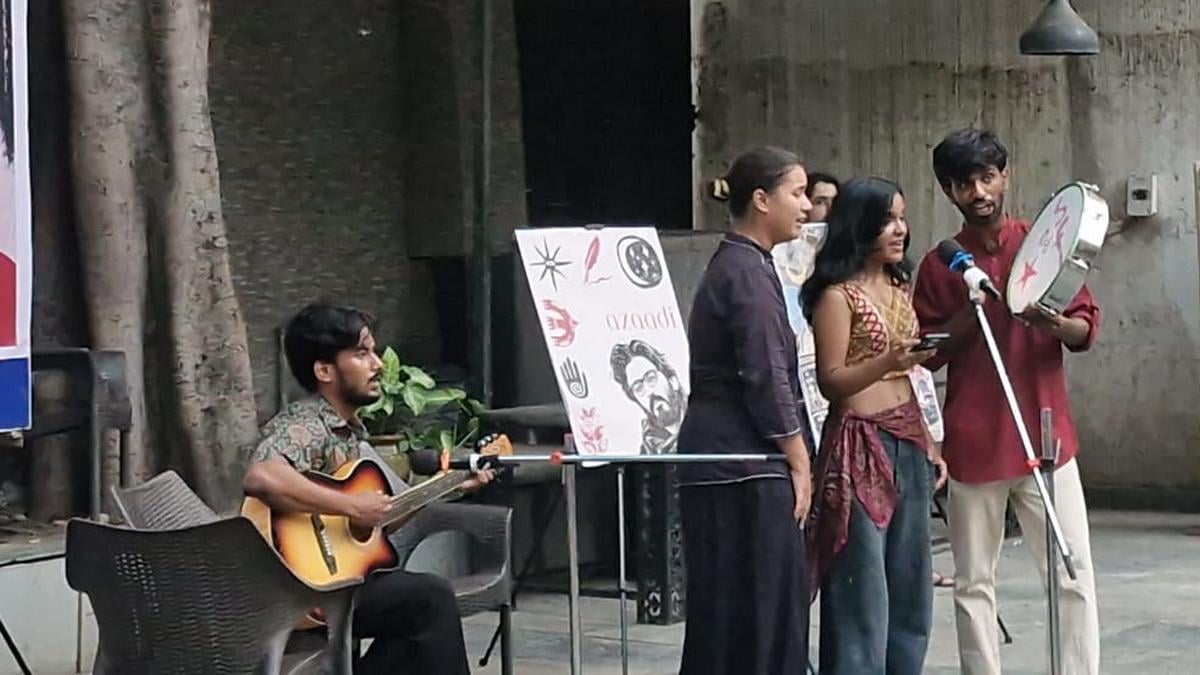
New Delhi: By 3:20 pm, half the chairs at the Press Club of India were still empty. Not for a dearth of an audience, but because half the room had gathered opposite the stage, reading the walls.
Posters and placards had filled every available surface, featuring Umar Khalid, Sharjeel Imam, Mohammad Minhajuddin, Rejaz Sydeek and others associated with the anti-CAA protests. People moved sideways in the narrow aisle to let strangers get a clearer look, the way one does in a gallery. Many were even buying the placards.
On stage, more images of Umar and Sharjeel were still being propped up. By the time the performances began, the Press Club did not feel like a room waiting for a programme to start. It felt like a room that had already begun speaking.
Hum Dekhenge: An Evening of Cultural Resistance, organised by the Association for Protection of Civil Rights (APCR), brought resistance songs, protest poetry, nazms and recitations to commemorate the sixth anniversary of Umar Khalid’s arrest on 13 September 2020. He is still in jail after being booked under the Unlawful Activities (Prevention) Act, or UAPA, in the Delhi riots conspiracy case.
An APCR member anchoring the event opened by pointing out the oddity of the date.
“It is strange how this date has become an important part of our independent Indian calendar — as necessary as 15 August and 26 January.” On those two dates, he said, the country remembers the independence it won and the Constitution it wrote. On 13 September, it remembers where both currently stand.
The first performers on stage were Chemegoiyan, a performative reading collective featuring Alka Ranjan, Purva Bhardwaj and Raza Haider. They started with a passage from Khalid’s prison diary, A Day in Tihar.
“Khalid, utho, haath hilaao. Khalid, abbay zinda hai?” (Khalid, get up, move your hand. Khalid, are you alive?) Raza Haider recited the opening lines, his voice echoing Khalid’s words.
Then, the three took turns reading from the passage, passing fragments of Khalid’s normal day in jail. One voice spoke of the morning headcount and waiting for basic facilities, another of reading censored newspapers and making five-minute calls, and the third of fellow inmates, shared meals and the small routines that make up a day behind bars.
There were no grand declarations, only the details of a life continuing inside a place designed to stop it from moving forward.