 The Indian Express ·
Crime, law and justice
Banks, NBFCs cannot use force to seize vehicles in loan default cases: Supreme Court
The ruling came on an appeal by a man who had secured a commercial vehicle loan from Cholamandalam Investment and Finance Company Ltd for a truck.
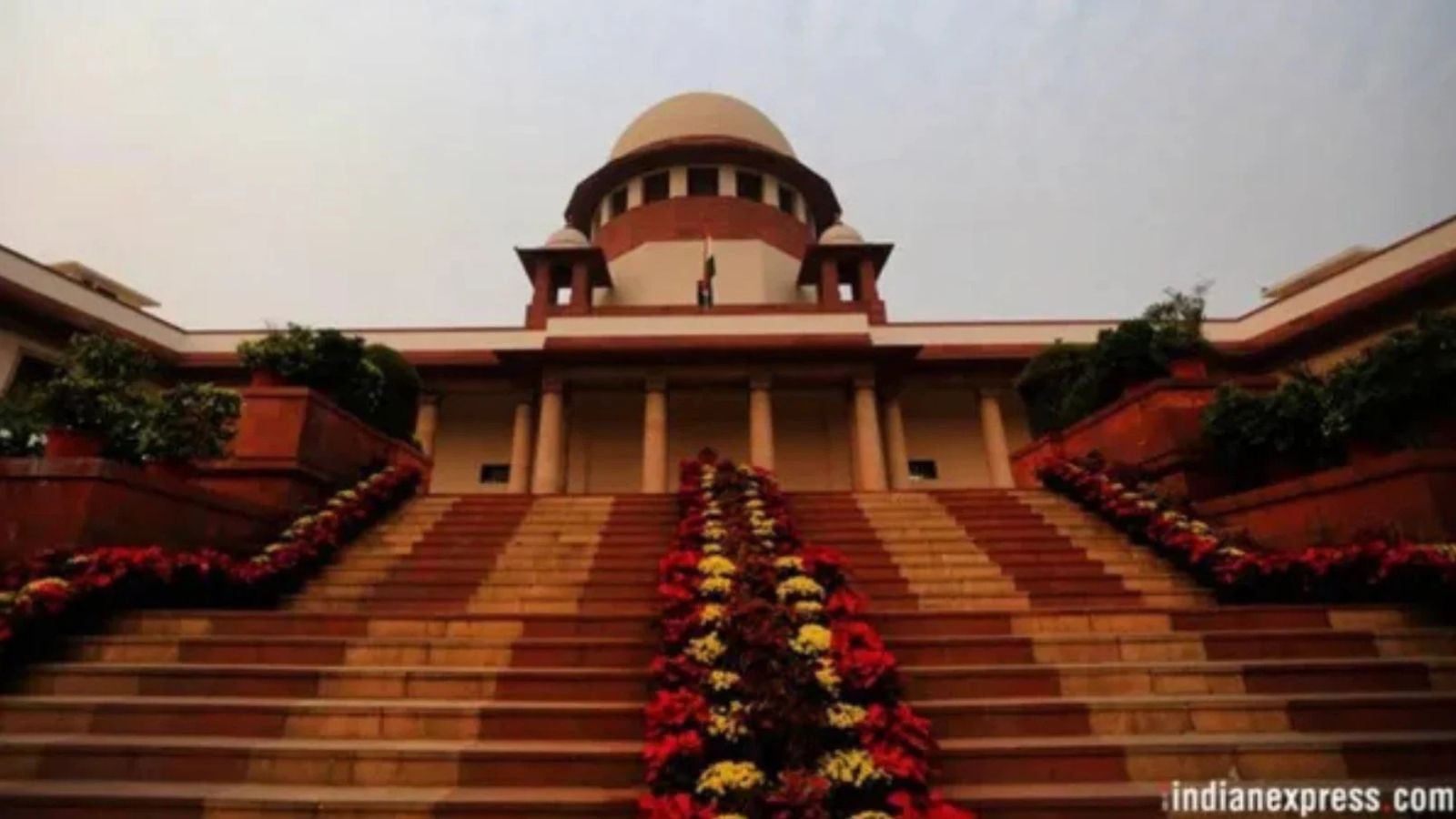
The Supreme Court Wednesday reiterated that Banks and Non-Banking Financial Companies (NBFCs) cannot employ force to seize financed vehicles in loan default cases.
A bench of Justices P S Narasimha and Alok Aradhe noted that guidelines issued by the Reserve Bank of India (RBI) to prevent this “have existed only on paper, and no steps have been taken to implement it”.
Justice Aradhe said, “It is well-settled in law that a financier’s right to take possession of the financed vehicle in the first instance is a matter of contract… They are what make it commercially feasible for institutions to extend credit, against the security of the very asset financed, to borrowers of modest means.”
“Because this right operates… outside the supervision of a court at the first instance, it must be construed with great circumspection… Left unchecked, it is capable of being read as an unbridled licence to seize property by stealth, by force or in the dead of night, converting a facility meant to promote financial inclusion into an instrument of oppression against the very class it was designed to serve,” the court added.
The ruling came on an appeal by a man who had secured a commercial vehicle loan from Cholamandalam Investment and Finance Company Ltd for a truck.
When he defaulted on repayments, the company issued him notice and on continued default, repossessed the vehicle. It released the truck after the man paid a lump sum and assured to regularise the loan account.
However, he defaulted again, leading to notices and repossession, and ultimately, the sale of the vehicle.
The man claimed that on April 9, 2023, four unidentified persons broke the vehicle’s steering lock at about 1 am while it stood parked after making delivery of goods at a godown in Ayodhya, and drove it away.
He alleged that the truck was repossessed without issuing any notice to him and that he was asked to pay the outstanding amount after adjusting the sale proceeds.
The Chief Judicial Magistrate Court Ayodhya and the Allahabad High Court had earlier dismissed his plea.
On appeal, the SC pointed out that on May 5, 2003, the RBI had issued guidelines on ‘Fair Practices Code for Lenders’, which states that “in the matters of recovery of loans, the lenders should not resort to undue harassment viz., persistently bothering the borrowers at odd hours, use of muscle power for recovery of loans, etc.”
The top court also referred to its February 26, 2007, decision in Manager, ICICI Bank Ltd vs Prakash Kaur and Others, where it said that “ours is a country governed by rule of law and recovery of loans or seizures of vehicles could only be made through the legal means and the banks cannot employ ‘goondas’ to take possession of the vehicles by force”.
In the latest case, the SC noted that the loan agreement placed the man entirely at the mercy of financier’s unilateral discretion, both as to whether notice will be given at all and as to the manner and timing of the sale.
It further held that this was “neither in consonance with the Guidelines issued by the RBI nor the provisions of the Indian Contract Act, 1872”.
The bench concluded that no seven-day notice was issued to the man prior to repossession and that taking possession of the vehicle by breaking open the steering lock “is one which bears every mark of the very ‘goondaism’ that this Court, in Prakash Kaur…and the RBI, in its successive Guidelines, have condemned”.
“It is the balance… between the legitimate need of the financier for an efficient recovery mechanism and the equally legitimate entitlement of the borrower to be treated fairly, with notice and due process, before he is deprived of the very asset by which he earns his bread, that the Company failed to observe on the facts before us,” the court said, before ordering payment of compensation to Sharma for violation of his constitutional rights.
It also directed RBI “to take effective steps to secure genuine compliance” to its guidelines and circulars.