 Scroll.in ·
A journalist exposing rape claims against Dera chief was killed. His son awaits justice 24 years on
The Supreme Court will soon hear a plea against the overturning of Gurmeet Ram Rahim Singh’s conviction in the 2002 murder of Ram Chander Chhatrapati.
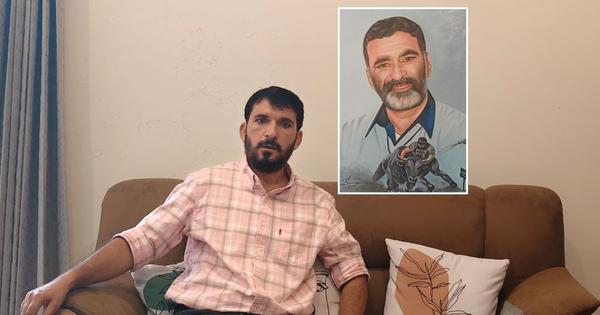
Anshul Chhatrapati grew up knowing his father was different.
The name he inherited from him was itself a giveaway – Chhatrapati, a Sanskrit word for sovereign ruler, is most commonly associated with 17th century Maratha king, Chhatrapati Shivaji. That it was being used as a family name in Sirsa, a town in Haryana on the border with Punjab, was highly unusual.
“It was during his college days,” explained Anshul, speaking of his father Ram Chander Chhatrapati, “that one of his teachers had given him the title Chhatrapati for his leadership qualities and passion”.
It was Ram Chander Chhatrapati’s passion for truth and journalism that eventually cost him his life.
In October 2002, two assailants shot at him outside his home in Sirsa. As they fled, one was nabbed by the police. They turned out to be followers of Gurmeet Ram Rahim, a self-styled godman who had set up a religious organisation called the Dera Sacha Sauda, which had grown politically influential on the back of its following among the Dalits of Punjab and Haryana.
Ram Chander Chhatrapati died of his injuries a month later at the age of 52. In the run-up to the murder, he had been relentlessly publishing stories about rape allegations against Ram Rahim.
The godman’s driver later told investigators that he had overheard him instructing his followers to murder the journalist. But the driver dithered in court, taking years to eventually stand by his testimony. It took 17 years for Ram Rahim to be convicted for Ram Chander Chhatrapati’s murder.
In March, the Punjab and Haryana High Court overturned the 2019 conviction, taking the view that the driver’s word could not be relied upon.
Anshul Chhatrapati is unfazed by the setback. He has filed an appeal in the Supreme Court, which will hear his petition in November, just months before Punjab votes in the state assembly elections. Behind bars, Ram Rahim has continued to wield political influence: in the nine years he has spent in jail after being convicted on rape charges in 2017, he has been released on parole 17 times, often coinciding with elections.
“We are not going to stop,” said Anshul Chhatrapati. “The struggle is not over.”
It is a struggle that has reshaped his life. He was in college when his father was murdered. Pursuing justice through the legal system meant he could not attend classes and eventually had to drop out. Fighting the powerful godman came with its own risks: an armed guard of Haryana Police shadowed him for decades. The security cover extended to his entire family.
“My children haven’t had a normal childhood,” said Anshul Chhatrapati, now in his mid-40s. “For a better part of their childhood, going out for them only meant heading to school and back.”
But he has no regrets. “My father would have been very proud of me,” he said. “This struggle has made a man out of me.”
Like thousands of families in North India, Anshul Chhatrapati’s family traces its roots to Pakistan. After Partition, his grandfather had tried to build a new life. “Once he settled in India, the refugees were allotted agricultural land to derive their livelihood,” he recalled. “At that time, Sirsa’s land was not cultivable at all but our ancestors had no choice.”
Born in 1950, Ram Chander Chhatrapati, however, was a non-conformist. He did not have much interest in farming. “His true calling was writing and activism,” Anshul recalled. “He loved reading newspaper editorials, Munshi Premchand and Lenin.”
After he completed his college education in Haryana, Chhatrapati moved to Delhi. “My father spent quite a long time in Delhi with Swami Agnivesh, a follower of Arya Samaj,” Anshul said. The Arya Samaj is a Hindu reform movement. His parents felt he was wasting time and brought him back home to get married, said Anshul. “They felt it was the only way to make him serious about life and his share of land.”
After his marriage, Chhatrapati studied law and began practising at Sirsa district court. The family was also supported by the income from his share of the agricultural land. “But he was not satisfied being a lawyer,” said Anshul.
In 2002, Ram Chander Chhatrapati quit the legal profession and revived an old newspaper registered in his name under a new title – an evening daily called Poora Sach, the complete truth.
In May 2002, a three-page letter written to Atal Bihari Vajpayee, who was the prime minister then, began circulating in Sirsa. A female disciple of Gurmeet Ram Rahim Singh had written the letter alleging that he had raped her. The letter, which was also copied to senior officials in Punjab and Haryana, mentioned that she was not his only victim.
On May 30 that year, Chhatrapati published a two-column front page story about the letter in his newspaper. He did not mention the name of the Dera where the incident had taken place or the guru accused of rape, but he followed the story very closely. Anshul said the anonymous letter had been published by national newspapers but there had been no follow-up reports on it.
Lekh Raj Dhot, Chhatrapati’s friend from his lawyer days, said the journalist had a “passionate” temperament. Everyone told Chhatrapati not to write against the Dera as they could harm him, but that did not deter him, said Dhot. “His psyche was different. There was no fear in him.”
Panicked by the circulation of the letter, there were numerous incidents around Sirsa that year where Dera followers targeted men accused of circulating the letter. “A couple of Xerox shops, accused of making copies of the letter, were vandalised by Dera followers,” recalled Anshul. “My father continued to file stories on these incidents but we had no idea that he had been receiving threats from the Dera henchmen.”
In July 2002, Chhatrapati wrote to the Sirsa superintendent of police, detailing the intimidation he was facing at the hands of Dera. “He mentioned a phone call in which he was threatened and how some suspicious people outside his office had created an atmosphere of terror for him and his staff,” said Anshul.
In September 2002, the Punjab and Haryana High Court took cognisance of the anonymous letter and sought a report from the district sessions judge of Sirsa. In a report to the high court, Sirsa district judge MS Sular recommended a probe by a central investigation agency. On September 24, 2002, the Punjab and Haryana High Court ordered the the Central Bureau of Investigation to investigate the rape allegations.
According to Anshul, his father had managed to get the copies of the correspondence between the two judges. “He filed stories on all these developments.”
The Dera Sacha Sauda soon approached the high court, seeking a stay on the directions for a CBI probe, but the court dismissed its application. “On October 23, 2002, my father published a story about that,” said Anshul. “The next evening, he was shot five times outside our home by two men from Dera Sacha Sauda.” Chatrapati died a month later in a hospital in Delhi.
Anshul recalled his father as someone who could not look away from wrongdoing, even if he knew the consequences could be harmful. “He used to tell his friends that if someone ever dared to hurl anything at him, it wouldn’t be a shoe but a bullet,” said Anshul. “And he will take that bullet on his chest.”
In its initial statement on Chhatrapati being shot at, the Sirsa police had described the incident as a “property dispute.”
However, the police had to discard that theory immediately. “There’s a police post near our house and one of the shooters had run towards the post in panic,” recalled Anshul. “He ran directly into the policemen who were rushing towards the commotion.”
The shooter was identified as Kuldeep Singh, a Dera follower from Faridkot Punjab. The other shooter was his cousin Nirmal Singh, who was arrested a few days later. “The police recovered a walkie-talkie from their possession which was registered in the name of Dera Sacha Sauda and a pistol which was licensed in the name of Krishan Lal, a manager at the Dera,” Anshul added.
According to Anshul, the arrest of Kuldeep Singh on the spot was a fundamental piece of evidence in establishing the role of the in Dera Sacha Sauda his father’s murder. “We would have cried all our life about the Dera’s involvement but who would have trusted us?”
All the three accused whose names surfaced in the preliminary investigations were arrested by the Sirsa police, but Chhatrapati’s family was not satisfied. “The Sirsa police had avoided naming the Dera chief as the main conspirator behind the murder even when my father had given a statement on his death bed while being hospitalised,” said Anshul.
In early 2003, the family filed a petition before the Punjab and Haryana High Court, seeking a Central Bureau of Investigation probe.
Another development helped Chhatrapati’s family.
Three months before Chhatrapati’s killing, Ranjit Singh, a Dera follower and former manager of Ram Rahim, was shot dead on July 10, 2002, at his native village in Haryana’s Kurukshetra district. Ranjit Singh’s family had also approached the Punjab and Haryana High Court, demanding a CBI inquiry in his murder. “The high court clubbed both these petitions together.”
On November 10, 2003, the High Court ordered the CBI to investigate the journalist’s murder case anew. The CBI registered a first information report in Chhatrapati’s murder on December 9, 2003.
But the CBI could not start its investigation as some female disciples of the Dera Sacha Sauda challenged the High Court’s order in the Supreme Court. In 2004, the Supreme Court stayed the high court’s CBI probe order . “It took the Supreme Court a year to dispose of the Dera’s petition and uphold the high court’s order.”
This would become a permanent feature in the more than two-decade-long battle to pin down the role of Ram Rahim in Chhatrapati’s murder. “From day one, we wanted the investigation agency to go to the root of the murder which was the Dera chief Gurmeet Singh,” said Anshul. For Chhatrapati’s family, that meant a constant vigil on the developments in the case. “Every time we felt there were attempts to shield him, we approached the court. Once the court ruled in our favour, the sect would approach the Supreme Court.”
While these legal skirmishes took a lot of time and frustrated the family, they did not give up. “How could we face the world if Chhatrapati’s family gave up the fight against evil?”
In July 2007, the Central Bureau of Investigation filed a chargesheet against Dera chief Ram Rahim, his manager Krishan Lal and the two shooters, Kuldeep Singh and Nirmal Singh. The agency charged all four with murder and criminal conspiracy. Nirmal Singh and Krishan Lal were also charged under the Arms Act.
In its separate chargesheet filed the same year, the agency established that the Dera chief suspected Ranjit Singh of circulating the anonymous letter which accused the godman of raping female disciples in the sect’s premises. This was the same letter which Chhatrapati had written about extensively in his newspaper between May 2002 until his murder in October, 2002.
A key witness who helped the CBI pin down Ram Rahim was Khatta Singh, a long-time driver of the self-styled godman.
Khatta Singh had recorded a statement before the agency in 2007 in which he deposed that he had witnessed Gurmeet Singh ordering Krishan Lal, Nirmal Singh and Kuldeep Singh to “eliminate” Chhatrapati so that “he may not write against Dera Sacha Sauda in future.” Singh had recorded the same statement under section 164 of the Code of Criminal Procedure before a judicial magistrate in Chandigarh.
This testimony was crucial but Khatta Singh turned hostile during the trial in 2012. According to the CBI, Khatta Singh was under “tremendous pressure” due to “threats.”
Khatta Singh also happened to be a witness in the murder of Dera manager Ranjit Singh which was being investigated separately by the CBI.
It was only after the conviction of Gurmeet Singh for raping his two female disciples and subsequent imprisonment in August 2017 that Khatta Singh changed his mind.
Nearly three weeks later, Khatta Singh moved an application before the CBI court in Panchkula, seeking to be re-examined as a witness in the trial of Chhatrapati’s murder. However, the trial court dismissed Singh’s application, forcing him to move the Punjab and Haryana High Court in 2018.
In January 2019, the Chhatrapati’s family found a semblance of justice. The CBI special court convicted Ram Rahim and three others for the journalist’s murder and sentenced them to life imprisonment.
Seven years later, the Punjab and Haryana High Court acquitted Ram Rahim in the journalist’s murder case in March. The court said “absolutely no reliance can be placed on a witness like Khatta Singh”. It observed that Khatta Singh had chosen to stay silent for a number of years after the incident and “kept on tossing from one side to the other like a ping pong ball.”
Earlier, in May 2024, the High Court had also acquitted Ram Rahim in the murder case of his former manager and follower Ranjit Singh. The Dera chief, however, remains in jail, serving a 20-year-long imprisonment for rape.
‘Inspired by father’s sacrifice’
Ram Chander Chhatrapati was survived by his wife, two sons and two daughters. As the eldest child, it fell upon Anshul to take charge of the legal battle against his father’s murderers. Anshul was just like any other college student then, but his father’s death inspired him. “The struggle for justice became the purpose of my life,” he said.
“All my life, every stranger felt like a threat to me,” said Anshul. “But that never stopped me from going out and facing the world.”
“The common perception is that law took its course and eventually punished the culprit,” he continued. But the reality was different. “From day one, there were attempts to keep away Dera’s involvement in the murder. That’s why we had to fight from the very first step and follow the case’s development obsessively.”
This left him with no time to finish college. “During all these years, I had tried to restart my education but I couldn’t continue because there would be a development in the case and I had to act accordingly, meet lawyers and approach courts, etc,” he noted.
The family’s agricultural land proved to be a safety net. Anshul earns his living from farming even though he looks like a corporate employee, dressed in stylish clothes and shiny shoes.
A soft-spoken man, he joked as he wondered what his life might have been like, had his father not been murdered. “I was recently telling my daughter that we both should pursue our graduation together,” he chuckled.