 DW (Deutsche Welle) ·
Politics
India news: New Delhi denies claims world leaders fell ill after BRICS summit
India's Foreign Ministry rejected viral social media claims that leaders fell ill after the BRICS summit. Meanwhile, India defended its right to buy oil from diverse sources after the US passed a new sanctions bill.
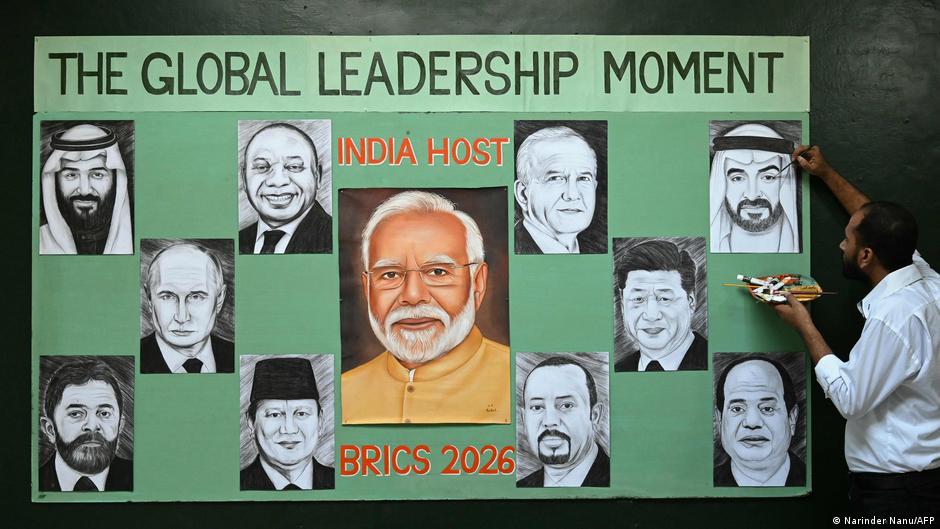
This blog is now closed. Below is a roundup of some of the top headlines from across India on Thursday, September 17.
Tired of missing our real-time updates? Click here to add us as a Preferred Source on Google. Then tap the "Star" or "Preferred" to keep DW News at the top of your feed.
We have now closed this blog.
Thank you for following our coverage of headlines from India on Thursday, September 17!
Girls make a comeback — What India is doing about the women shortage | DW Documentary
For decades, many families in India and China did not want daughters. Girls were often aborted, killed as infants, abandoned or sold.
In recent years, things have started to change.
Political decisions aimed at curbing rapid population growth in India and China, together with a widespread preference for boys for economic reasons, have led to a situation where both countries now have more men than women.
As early as 1990, Indian economist Amartya Sen, who would later win the Nobel Prize in Economics, warned that more than 100 million women were "missing" in the developing world, and especially in India and China, in the ratio to men.
But slowly, there has been a shift in thinking in both countries — both in politics and society.
WATCH — How urban kitchens are driving demand for indigenous spices from Kerala
As interest in Kerala's turmeric, black pepper and cinnamon grows, farmers have adopted more sustainable practices.
Happy birthday, Narendra Modi: BJP competes for leader's affection
Today is Indian Prime Minister Narendra Modi's birthday, and his Bharatiya Janata Party is pulling out all the stops to celebrate the milestone.
The leader's 76th birthday has turned into an unofficial race by BJP-ruled states, with each arm of the political party attempting to outshine each other via campaigns that involve lighting candles, elaborate social media output, drawing competitions, motorbike rallies and more.
BJP-led state governments have launched a month-long series of celebrations marking the birthday and 25 years in public office, a move not usually associated with heads of state in recent years.
In Delhi, schools have been directed to hold earthen lamp-lighting ceremonies on campus, The Wire reported, with schools also told to record and upload video footage of the events.
The celebrations, branded the "Seva Sankalp Abhiyan" — meaning "Service and Resolution Campaign" in Hindi — run from September 17 to October 17. Delhi Chief Minister Rekha Gupta has said the campaign will also include blood donation drives — also being run in other states — as well as the inauguration of development projects worth roughly 13,820 crore rupees (around €1.25 million or $1.45 million).
The lamp-lighting ceremony, dubbed the "Ashirwad Ka Diya" or "lamp of blessing" programme, will also take place across other BJP-led states, including West Bengal, Gujarat, Uttar Pradesh, and more.
In Odisha, party leadership has asked people to light the lamps and upload photographs and videos on social media, local media reported.
In Modi's home state of Gujarat, Interior Minister Amit Shah has launched a bike rally from the PM's birthplace of Vadnagar to his constituency, Varanasi.
There were also prayers conducted at several temples across the country.
With the BJP's state arms running their own social media campaigns to celebrate the leader, who will be the real winner?
Supreme Court rejects government's appeals against disabled veterans' pensions
India's Supreme Court dismissed 271 appeals filed by Prime Minister Narendra Modi's government challenging disability pensions awarded to former armed forces personnel, ruling that the government still bears the burden of proving a serviceman's disability was unrelated to military service, local media reported.
A two-judge bench of Justices PS Narasimha and Alok Aradhe held that while the 2008 pension rules removed an earlier presumption that a soldier was fit upon entering service, this did not shift the entire burden of proof onto the serviceman.
The court said the "onus to prove that the member's disability is not attributable to service still lies on the employer."
The appeals stemmed from cases where military release medical boards had classified disabilities as "neither attributable nor aggravated" by service, only for the Armed Forces Tribunal or high courts to overturn those findings and grant pensions.
The bench also criticized the government for pursuing appeals it said were largely time-barred, and cited Right to Information data showing the vast majority of departmental pension appeals from ex-servicemen are rejected at earlier stages.
The court referenced a 2015 defense ministry report that had recommended withdrawing such litigation against disabled soldiers, noting the recommendation was never fully implemented.
India's Foreign Ministry slams reports that world leaders fell ill after BRICS summit
India's Ministry of External Affairs has rejected social media claims that several world leaders fell ill after attending the BRICS Summit held in New Delhi on September 12-13, calling the reports "fake" and warning against "malicious" posts.
The MEA's fact-checking unit posted on X: "Fake Alert!!! 🚨🚨🚨 We caution against such malicious posts on social media platforms!" This included a social media post by Polymarket, one of the world's largest prediction market platforms.
The clarification followed genuine confirmation from South African President Cyril Ramaphosa's office that he had withdrawn from public engagements after returning from the summit, having been advised to rest due to ill health.
Separately, unverified posts claimed Chinese President Xi Jinping fainted and left the summit early for medical treatment. The claim originated from Wanjun Xie, chairman of the China Democracy Party, and was not confirmed by Chinese or Indian officials. Beijing has banned the party.
Xi is confirmed to have attended the summit and met bilaterally with Prime Minister Narendra Modi.
India vows to protect trade and economic interests amid threat of US's Russia-linked tariffs
India said Thursday it remains committed to securing energy supplies for its 1.4 billion people and will keep sourcing oil from diverse suppliers, hours after the US House of Representatives passed a bill authorizing tariffs of up to 100% on countries that continue buying Russian oil and gas, including India, along with new sanctions tied to Russia's war in Ukraine.
The bill now goes to President Donald Trump for signature.
India's Ministry of External Affairs issued a statement responding directly to the legislation: "India remains firmly committed to ensuring energy security for its 1.4 billion people. It will continue to do so through diversified sourcing and on the basis of evolving market dynamics."
The ministry said it had raised the issue with US officials in recent months, adding, "Its potential implications for not just the bilateral relationship but also the international energy market have been very clearly articulated by the Indian side."
"The Indian side has also made clear its determination to take all necessary measures to protect its trade and economic interests," the statement added, saying it would work with trade and industry bodies on the legislation's implications.
India is the world's third-largest oil importer, and Russia has become one of its largest suppliers as well as a longstanding strategic and military partner. New Delhi has consistently defended the relationship as necessary for its energy needs, resisting outside pressure to scale it back.
What do we know about the sanctions?
The package targets Russia's energy and defense sectors, President Vladimir Putin and other senior officials. It also targets Moscow's so-called shadow fleet, old tankers it uses to circumvent sanctions.
More controversially, the legislation allows Trump to impose secondary sanctions on countries that rely on Russian oil and gas, in the form of tariffs. Beijing and New Delhi are expected to be the main targets of such measures.
The bill would also extend sanctions on Iran.
To learn more about the bill passed by the US Congress, click here.
Hello! This is Seerat from DW's Studio Delhi, once again bringing you the latest from across India.
….And we start with the United States. The US Congress has passed its Russia sanctions bill, and the repercussions are being felt far and wide, including in India, where the Ministry of External Affairs (MEA) said the country will protect its trade and economic interests.
The MEA has also been busy debunking the narrative that several world leaders have fallen sick after their trip to India for the BRICS summit.
In other news, the Indian Supreme Court has dismissed an appeal by Prime Minister Modi's government to deny disability pension granted to veterans.
For this and more, follow our live blog.