 Firstpost ·
Vance says Trump can 'part ways' with Netanyahu when needed amid tensions in West Asia
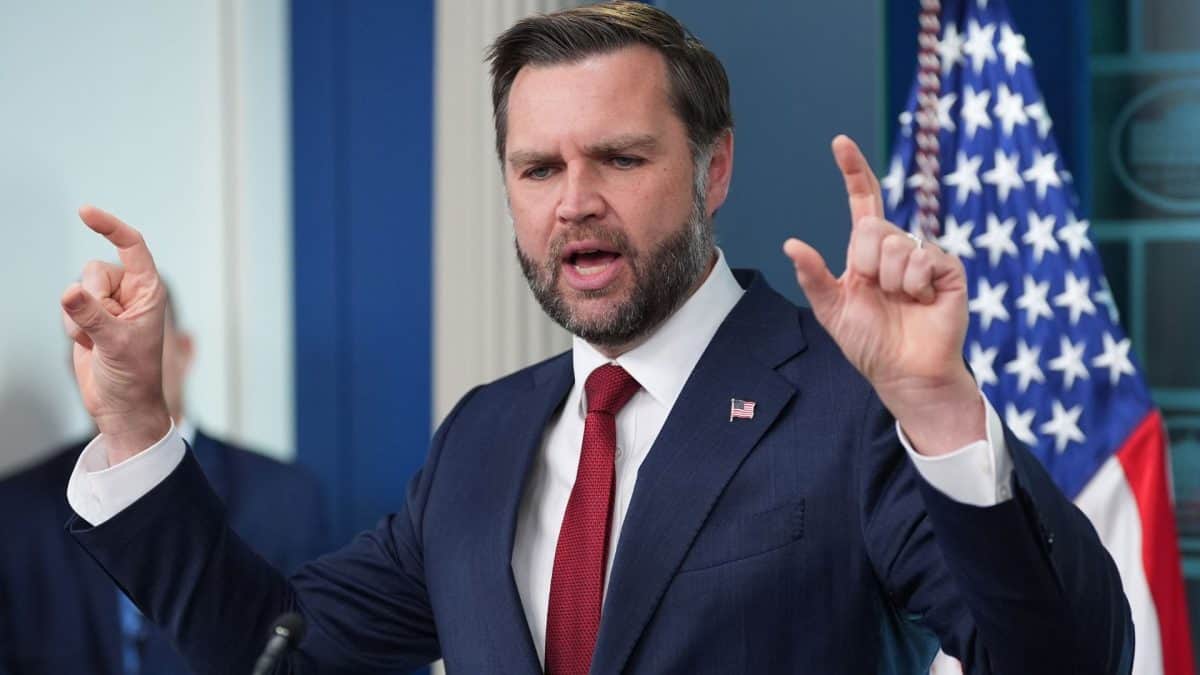
US Vice President JD Vance said on Tuesday that President Donald Trump has demonstrated willingness to break with Israel's Prime Minister Benjamin Netanyahu when Israeli interests diverge, insisting that Trump 'will part ways with Netanyahu when needed'
US Vice President JD Vance said on Tuesday that President Donald Trump has demonstrated willingness to break with Israel's Prime Minister Benjamin Netanyahu when Israeli interests diverge, insisting that Trump "will part ways with Netanyahu when needed". Meanwhile, Vance also insisted that the American West Asia policy cannot be "subservient" to Israel.
The remarks from the American Vice President came during his appearance at the All-In Podcast summit, where he discussed the US-Israel relationship and the administration's approach to American foreign policy. "More than frankly any president in the last 40 years, he has shown a willingness to actually part ways with Bibi Netanyahu when he feels like the interests of the American people are different from the interests of the government of Israel," Vance said, referring to the Israeli Prime Minister by his nickname.
However, he maintained that Israel continues to remain an important American partner, particularly in military technology and intelligence sharing, but argued that close alliances do not require the two countries to agree on every policy. "Bibi's a good partner, but also Bibi and I have a different opinion on this," Vance said in describing the approach he attributed to Trump.
He went on to point out that there could be instances in which Netanyahu is right from Israel's perspective, but the United States needs to pursue a different course based on American interests. The American vice president later compared the US-Israel relationship with America's partnerships within NATO.
Vance equates US-Israel ties to those of US-NATO ties
Vance said that while the United States has "a lot of important relationships" and partnerships within NATO, that does not mean Washington should make its European foreign policy "subservient to NATO." "In the same way that we cannot let our Middle Eastern foreign policy be subservient to the state of Israel," he explained.
"We're going to work with people when we work with them. We're going to disagree when we disagree. And we're going to pursue America's interests," he added. It is pertinent to note that Vance's remarks echoed the one he made in June when he said that the US and Israeli interests are not always aligned and that the United States would pursue what it determines to be in the best interests of Americans when the two countries' positions diverge.
At that time, the Republican firebrand remarked Netanyahu had "certainly gotten some things wrong" but declined to identify specific examples, saying such discussions were better handled privately. He went on to describe Netanyahu as a "good partner" and said the administration would continue working with Israel.
The latest comments came at a time when the Trump administration continues to maintain a close military relationship with Israel. The administration is planning a proposed $2.8 billion arms package for Israel that includes 40,000 2,000-pound bombs, according to The Associated Press.
However, the package has not yet been finalised, and most of the purchase would be financed through U.S. foreign military financing.