 The Indian Express ·
Crime, law and justice
DTC conductor gets Delhi High Court relief 30 years after overcharging accusation, penalty
The bus conductor allegedly collected higher fares from passengers in 1996, leading to a departmental enquiry against him.
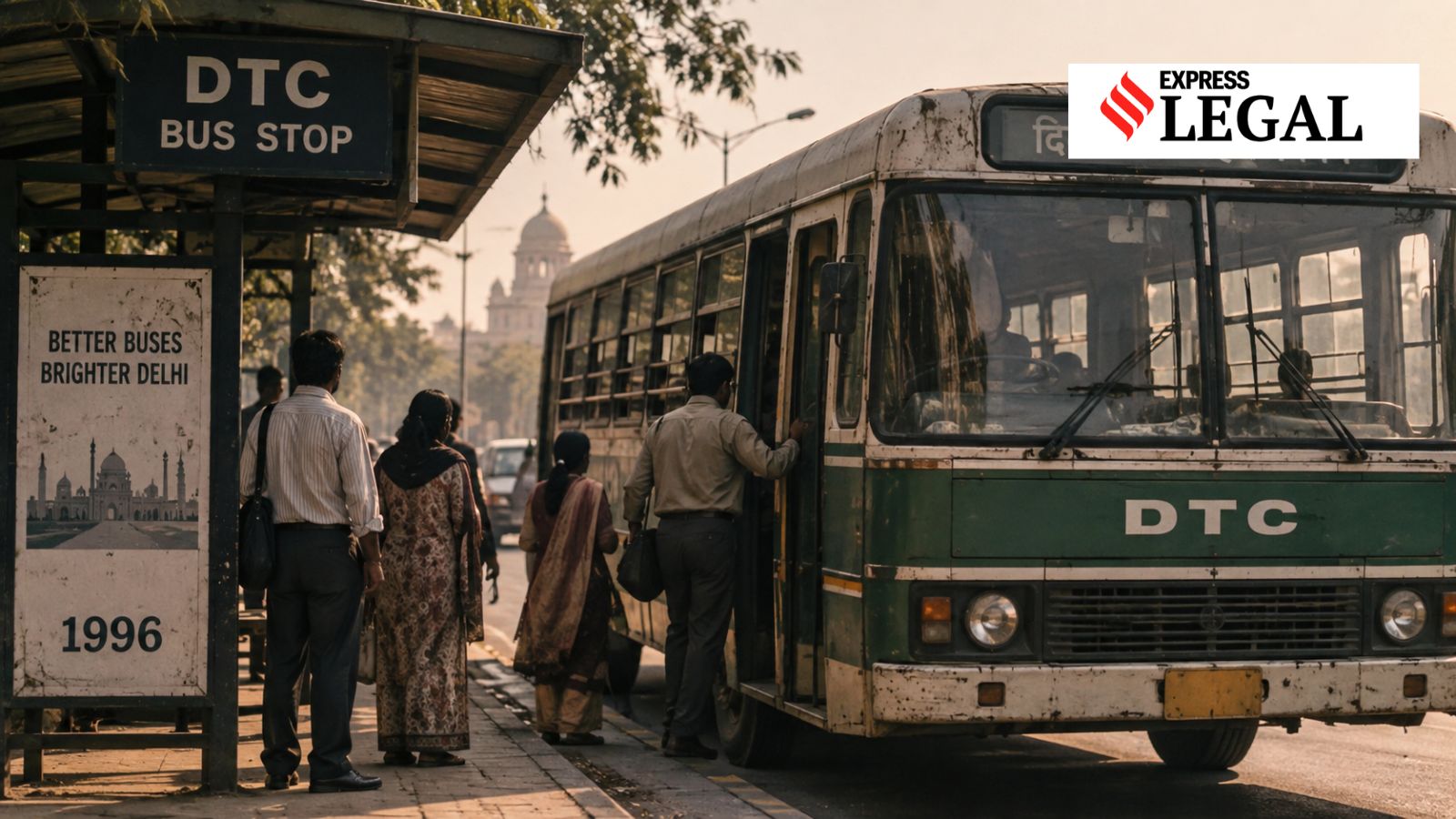
DTC news: 30 years after a Delhi Transport Corporation (DTC) bus conductor was accused of overcharging passengers, the Delhi High Court has directed the transport body to restore the wages withheld from him as punishment. The court found that DTC could not produce the enquiry records or evidence from passengers and checking staff to support the allegations.
Justice Amit Mahajan was hearing an appeal filed by the corporation challenging an August 2005 decision which held that the conductor was entitled to arrears of back wages that had been denied under the 1998 punishment order.
“The learned tribunal rightly concluded that the misconduct could not be said to have been proved before it and consequently held the punishment imposed upon the workman to be illegal and unjustified,” the September 14 order read.
‘Collected higher fares’
The conductor said he was engaged with the corporation in 1996 when he was issued a chargesheet dated May 31, alleging that while he was on duty on a bus operating from Delhi to Patiala, he had collected Rs 13 from certain passengers but issued only Rs 5 tickets.
It was also alleged that one passenger had paid Rs 18, but he was issued a ticket for Rs 8 only, another was issued a Rs 15 ticket when he had paid Rs 20. It was also claimed that the conductor had tried to hurt the checking staff in collusion with the driver and used abusive language.
Justice Amit Mahajan passed the order on September 14.
The departmental enquiry led to the imposition of a penalty under which three of his increments were stopped by an order dated May 29, 1998. He appealed against this punishment, but it was dismissed. Later, the conductor approached the industrial tribunal, which observed that the punishment imposed was illegal and unjustified, and held that he was entitled to arrears of the withheld wages.
Aggrieved, the DTC moved the high court challenging the tribunal’s order. The transport corporation was represented by advocate Manisha Tyagi, while no one appeared for the conductor.
‘No enquiry report on record’
The court noted that DTC failed to place on record either the proceedings of the domestic enquiry or the enquiry officer’s report that led to the 1998 punishment order. It held that without these records, the tribunal could not determine whether the workman was given a proper opportunity to defend himself or whether the charges had been proved.
“Thus, the learned tribunal rightly found that the domestic enquiry stood vitiated,” it added. The court also found that the management did not state that it would independently prove the alleged misconduct and did not produce evidence from the checking officials, reporter or passengers to establish the allegations against the conductor.
“In these circumstances, the learned tribunal rightly concluded that the misconduct could not be said to have been proved before it and consequently held the punishment imposed upon the workman to be illegal and unjustified,” the high court held.
Accordingly, it dismissed the appeal and upheld the tribunal’s August 2005 order, granting relief to the conductor.